What Firefly Can Teach Today's Business Leaders
Fourteen episodes, one film, and two decades of cancelled potential — Firefly remains one of the most honest portrayals of leadership, team dynamics, and ethical decision-making ever committed to screen.
Series: Leadership, Post #5
Sci-FiThis post includes a Leadership Brief — an exclusive extended version.
What Firefly Can Teach Today’s Business Leaders
Leadership Lessons From the Edge of the ‘Verse
There are fourteen episodes of Firefly, one feature film, and enough cancelled potential to keep fans furious for over two decades. Joss Whedon’s space western was axed by Fox in 2002 before it had the chance to breathe. And yet, in the years since, it has become one of the most discussed, dissected, and beloved pieces of television ever made. Why? Because beneath the quips, the space cowboy aesthetic, and the occasional “shiny”, Firefly is a masterclass in human dynamics — loyalty, leadership, trust, ethics, and resilience under pressure.
In my opinion, the best stories about leadership aren’t found in Harvard Business Review. They’re found in the places where people are pushed to their absolute limits and have to decide, in real time, who they are and what they stand for. Serenity’s crew does exactly that, week after week. Here’s a look at what business leaders in 2025 can genuinely take from the bridge of that Firefly-class transport ship.
1. Malcolm Reynolds and the Art of Servant Leadership
Captain Malcolm Reynolds is not a conventional hero. He’s stubborn, occasionally reckless, and carries the wounds of a lost war with him everywhere he goes. But watch how he actually leads, and something interesting emerges: Mal consistently puts the wellbeing of his crew above his own interests, his own comfort, and often his own survival.
This is servant leadership in its rawest form.
- He protects his people first. When the crew are in danger, Mal doesn’t delegate risk — he absorbs it. Business leaders who insulate themselves from difficulty whilst pushing their teams into the blast radius destroy trust rapidly.
- He gives people room to be who they are. Zoe is his tactician. Wash flies the ship. Kaylee keeps it running. Mal doesn’t micromanage — he hires well and then gets out of the way. That’s harder than it sounds.
- He makes the hard call. There are several moments in the series where Mal has to choose between what’s easy and what’s right. He doesn’t always get it perfect, but he never ducks the decision. Leaders who avoid difficult choices in favour of consensus-by-committee create vacuums that others — not always the right people — will fill.
The lesson for business leaders: authority without service is just ego. The most effective leaders I have encountered in 25 years of enterprise services are those who see their role as enabling their teams, not directing them.
2. The Crew of Serenity: A Masterclass in High-Performing Teams
Look at who’s aboard Serenity. A soldier. A pilot. A mechanic. A mercenary. A companion. A shepherd. A doctor. A fugitive. A thief. These people have almost nothing in common, and in the early episodes, they don’t fully trust one another. Sound familiar?
Most enterprise teams are assembled under similar conditions — different backgrounds, different motivations, different tolerances for risk. Yet the crew of Serenity eventually becomes one of the most cohesive fictional teams ever written. Here’s how:
- Diverse skills, clear roles. Each crew member has a distinct function and is respected for it. There’s no role confusion, no territorial overlap. Kaylee isn’t expected to navigate; Wash isn’t expected to fix the engine. Clarity of role is foundational to team performance.
- Conflict is surfaced, not suppressed. Jayne is openly self-interested. Inara and Mal have unresolved tension throughout. These frictions are not glossed over — they’re worked through. Teams that suppress conflict don’t eliminate it; they just drive it underground where it causes more damage.
- Trust is earned incrementally. Nobody on Serenity is trusted blindly from day one. Mal watches, tests, and observes. Genuine trust is built through repeated evidence, not assumed through title or tenure.
The lesson for business leaders: building a high-performing team is not about finding people who are similar. It’s about finding people who are excellent at different things, giving them clarity, and letting the friction between perspectives sharpen the outcome.
3. Ethics at the Edge: Operating With Principle When the Rules Don’t Apply
One of Firefly’s most interesting features is its setting. The Alliance controls the core planets, but out on the rim — in the outer worlds — the rules are thin on the ground. Serenity operates in the grey spaces. Smuggling, mercenary work, jobs of dubious legality. And yet, the crew has a clear moral code that it refuses to abandon, even when breaking it would be profitable or survivable.
This maps uncomfortably well onto modern business reality.
- The grey market is larger than we admit. Regulatory arbitrage, grey-area data practices, aggressive tax structures — plenty of organisations operate in spaces where the rulebook is vague. The question Firefly keeps asking is: what do you stand for when nobody’s watching?
- Mal’s line in the sand. There are jobs Mal won’t take. People he won’t betray. Limits he won’t cross, even under duress. Every organisation needs equivalent “lines in the sand” — explicit ethical thresholds baked into culture, not just policy documents.
- Shepherd Book and the voice of conscience. Book rarely leads the action, but he serves a critical function: he asks the uncomfortable questions. Every leadership team benefits from someone in that role — the person who slows the room down and asks “but should we?” before everyone commits to “can we?”.
The lesson for business leaders: organisational culture is defined not by what you do when it’s easy, but by what you refuse to do when it would be convenient. Document your values. Test them. The moment they bend under commercial pressure, they were never values — they were decorations.
4. Resilience, Failure, and Moving On
The Battle of Serenity Valley is the defining trauma of Mal’s character arc. He fought for the Independents, believed in the cause with everything he had, and lost. Comprehensively. It broke something in him — and he spent years afterwards simply surviving, staying off the grid, finding meaning in small freedoms rather than grand missions.
This is one of the most honest portrayals of post-failure leadership I’ve seen in fiction.
- Failure changes people — and that’s not always bad. Mal comes out of Serenity Valley humbler, more pragmatic, and far more alert to idealism-as-a-weapon. Business leaders who have navigated genuine failure often make better decisions than those who haven’t — if they’ve processed it honestly.
- Survival is not the same as thriving. For much of the series, Mal is in survival mode. Keeping the ship flying, keeping the crew fed. There’s dignity in that, but there’s also a ceiling. The “Serenity” arc — from survival to something with larger purpose — mirrors the challenge many organisations face after a hard setback.
- The crew doesn’t leave. Perhaps most tellingly, despite the hardship, the crew stays. Not because Mal is charismatic or because the pay is good — it’s because there’s a sense of belonging, purpose, and mutual respect that outweighs the discomfort. Retention in difficult times is the truest test of leadership.
The lesson for business leaders: how you handle failure defines your culture more than how you handle success. Be honest about what went wrong. Don’t spin it. Learn from it visibly, so your team learns they can too.
5. River Tam and the Hidden Potential Problem
River Tam is, on the surface, unstable — a liability. She disrupts plans, creates risk, and needs protecting. For much of the series, Simon’s job is to contain her. And then, in the film Serenity, she becomes the most capable person on the ship.
The lesson is as uncomfortable as it is important: organisations routinely misread people whose value isn’t immediately legible.
- The assessment lens matters. River was evaluated by the Alliance as a resource to be weaponised. She was evaluated by Simon as someone to be protected. She evaluated herself, eventually, as someone capable of extraordinary things. Leaders who define team members through a single lens — capability, cost, compliance — miss dimension.
- Psychological safety unlocks latent ability. River performs best when she’s given space, not pressure. This isn’t unique to fictional psychics. Research consistently shows that psychological safety — the belief that you can speak up, take risks, and be imperfect without penalty — is the single biggest predictor of team performance.
- The awkward person in the room is sometimes the most important one. River’s neurodivergent presentation, her unusual communication patterns, and her unconventional thinking are not bugs. They’re features. How many organisations have “River Tams” who are managed as problems rather than developed as assets?
The lesson for business leaders: invest in understanding the full range of what your people are capable of. Performance is context-dependent. The conditions you create determine more than the talent you recruit.
6. Zoe and Wash: The Dual-Track Leadership Relationship
Zoe Washburne is second-in-command aboard Serenity and one of the most competent operators in the show. Her husband, Wash, pilots the ship. They have a fully equal relationship at home, but a clear chain of command at work — and both of them navigate that with rare maturity.
This dynamic is worth studying for organisations grappling with dual reporting lines, matrix management, and the blurred edges of hybrid working.
- Professionalism and relationship can coexist. Zoe doesn’t give Wash special treatment in operational decisions. Wash doesn’t undermine Zoe’s authority because they’re married. The separation requires explicit intention and mutual respect — not rules, but values.
- Conflict about the right things. Their arguments are typically about risk, priorities, and care — not power. They fight about outcomes, not about who’s in charge. This is a feature of psychologically healthy working relationships: disagreement about substance, not status.
- Zoe’s loyalty to Mal is not blind. She follows Mal because she trusts his leadership, not because she’s incapable of independent thought. There’s a crucial difference between loyalty and compliance, and great organisations build the former, not the latter.
The lesson for business leaders: clarity of role, mutual respect, and the willingness to disagree constructively are the foundations of any high-functioning professional relationship — personal or otherwise.
7. The Alliance: What Happens When Competence Replaces Values
The Alliance is not presented as cartoonishly evil. It’s presented as something more unsettling: a highly competent, well-resourced institution that has lost sight of why it exists. The Parliament believes it is doing good. The operatives believe they serve a righteous cause. The problem is systemic — the values got hollowed out somewhere along the way and replaced with efficiency, control, and a conviction that the ends justify the means.
This is the quiet institutional failure mode. And it’s far more common than the dramatic scandal type.
- “We have done the impossible, and that makes us mighty” — contrast this with the Alliance’s “we have achieved stability, and that justifies everything.” One is about capability with humility; the other is capability with hubris.
- When process becomes purpose. The Alliance’s bureaucratic machinery is its own justification. The goal is no longer the flourishing of citizens — it’s the maintenance of the system. Organisations fall into this trap constantly: KPIs that no longer track what matters, processes preserved beyond their usefulness, governance as theatre.
- The Operative’s moment of clarity. One of Serenity’s most powerful scenes is when the Alliance’s enforcer — an utterly effective, utterly committed operative — realises that the system he serves has been built on a lie. His response is not rage. It’s exhaustion. Leaders who have had this moment inside organisations will recognise it.
The lesson for business leaders: regularly audit not just what your organisation does, but why it does it. Purpose erosion is slow and largely invisible until it isn’t. The antidote is radical transparency with yourself and your leadership team about whether your original values still drive your actual decisions.
Final Thoughts
Firefly was cancelled too soon, and the business world is richer for the conversations it keeps generating two decades later. Joss Whedon and his writers created something that resonates not because it’s escapism, but because it’s honest. About the cost of leadership. About the fragility of teams. About the slow corruption of institutions that forget their purpose. About the extraordinary things people are capable of when they’re led with humility and given room to grow.
The ‘verse Mal Reynolds inhabits is brutal, underfunded, and politically hostile. Sound familiar? The response — build trust, clarify roles, hold your ethical line, develop your people, stay resilient — is not specific to science fiction. It’s just good leadership.
Shiny.
Enjoyed this post? Share it with someone who needs a reason to rewatch Firefly — or a nudge to rethink how they lead. You can find me on LinkedIn or drop a comment below.
What Firefly Can Teach Today’s Business Leaders
Leadership lessons from a man who lost his war and kept his people anyway
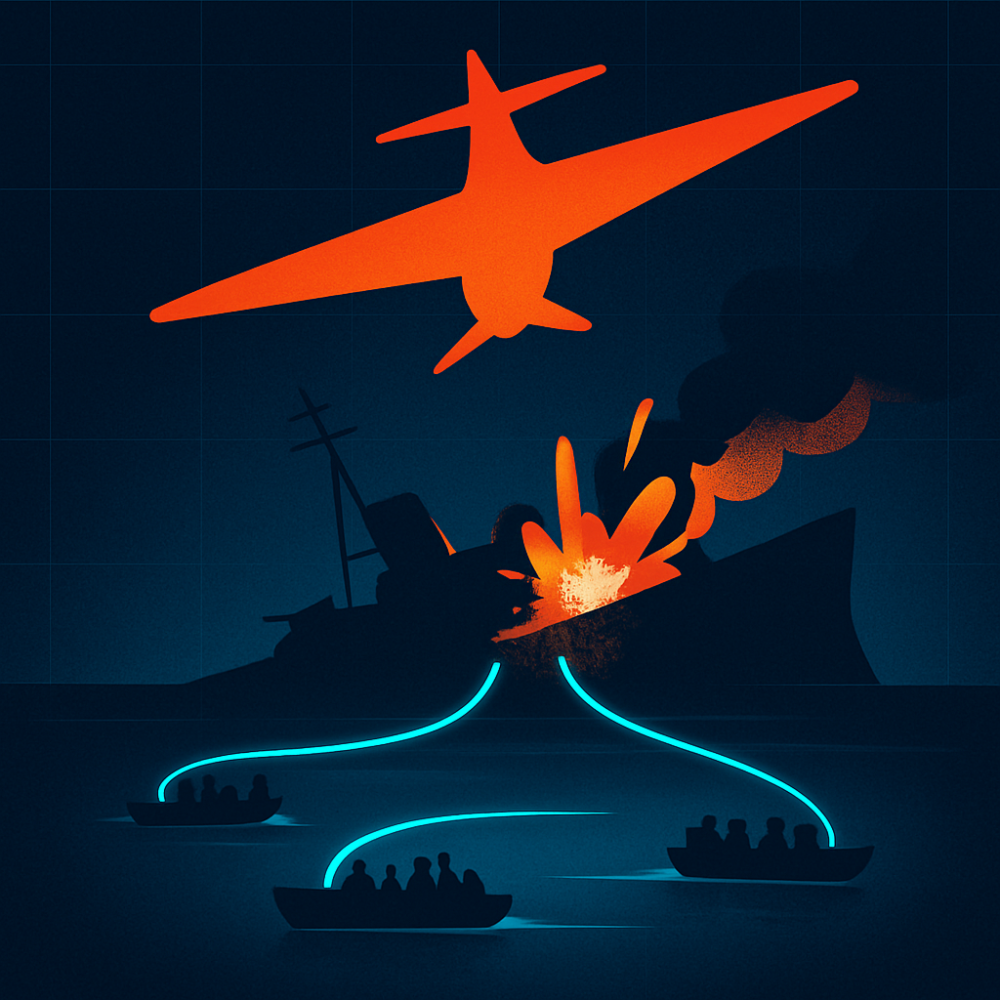
The defining moment of Malcolm Reynolds’ life is a defeat.
At the Battle of Serenity Valley — the engagement that gives his ship its name — Sergeant Reynolds fought for the Independents against the Alliance, believed in the cause with everything he had, held a position under impossible conditions for the better part of a week, and lost. Comprehensively. The Independents surrendered the whole war, the high command having decided the valley was not worth holding, after Mal and his people had already bled to hold it. He walked out of that valley with his faith in causes burned out of him, and spent the years afterwards simply surviving — staying off the grid, captaining a battered transport ship on the ragged edge of legality, finding meaning in small freedoms rather than grand missions because the grand mission had cost him too much.
And here is the thing that makes him worth studying. Despite all of that — the lost war, the chronic shortage of money, the constant danger, the absence of any cause grander than keeping the ship flying and the crew fed — the people aboard Serenity do not leave. A soldier, a pilot, a mechanic, a mercenary, a companion, a doctor, a fugitive: a collection of people with almost nothing in common and every practical reason to find safer, better-paid berths elsewhere, and they stay. Not because Mal is charming, which he frequently is not, and not because the pay is good, which it never is. They stay because there is a sense of belonging, purpose and mutual respect aboard that ship that outweighs the discomfort — and retention under genuinely difficult conditions is the truest test of leadership there is.
I have always thought the best stories about leadership are not found in the management literature but in the places where people are pushed to their limits and have to decide, in real time, who they are and what they will not do. Firefly — fourteen episodes and a film, cancelled too soon and argued over ever since — is one of those stories, and beneath the space-western aesthetic and the quips it is a remarkably honest study of loyalty, trust, ethics and resilience under pressure. Mal’s defeat is the right place to start, because the question that runs through the whole series is the one his defeat forced on him: when the cause is gone and the rules are thin and the situation is hostile, what is left to lead with? The answer Firefly keeps arriving at — and it is a genuinely useful answer for anyone leading in hard conditions — is that what you are left with is character, and the way you treat the people who chose to follow you.
Watch how Mal actually leads and a particular philosophy emerges, one the management world has a name for that does not begin to capture how hard it is to practise: servant leadership. He is stubborn, occasionally reckless, and carries his wounds everywhere, but the consistent thread is that he puts the wellbeing of his crew above his own interests, his own comfort, and frequently his own survival. When the crew is in danger he does not delegate the risk downward; he absorbs it, placing himself in the blast radius rather than his people — which is the precise inverse of the leader who insulates themselves from difficulty whilst pushing their teams into harm, and who destroys trust at speed by doing so. He gives people room to be who they are: Zoe is his tactician, Wash flies the ship, Kaylee keeps it running, and he does not micromanage any of them, because he hired well and then got out of the way, which is far harder than it sounds and far rarer than it should be. And he makes the hard call rather than ducking it. There are several moments where Mal has to choose between what is easy and what is right, and he does not always get it perfect, but he never hides from the decision in consensus-by-committee — because he understands, instinctively, that a leader who avoids the difficult choice creates a vacuum that someone else, not always the right someone, will fill. The lesson sits underneath all of it: authority without service is just ego, and the most effective leaders I have encountered in twenty-five years of enterprise work are the ones who see their role as enabling their people rather than directing them.
The crew Mal has assembled is, on paper, a staffing disaster, and in practice one of the most cohesive teams in fiction — which is exactly why it repays study, because most real teams are assembled under similar conditions. Different backgrounds, different motivations, wildly different tolerances for risk, and in the early episodes a conspicuous lack of mutual trust. What turns that collection into a crew is instructive. Each member has a distinct, respected function, with no role confusion and no territorial overlap — Kaylee is not expected to navigate, Wash is not expected to fix the engine — and that clarity of role is foundational to how the team performs under pressure, because when the situation turns hostile everyone already knows precisely what they own. The frictions, meanwhile, are surfaced rather than suppressed: Jayne is openly, unapologetically self-interested, the tension between Mal and Inara runs unresolved through the series, and none of it is glossed over, because the show understands that teams which suppress conflict do not eliminate it — they merely drive it underground, where it festers and does more damage than the open kind ever would. And trust aboard Serenity is earned incrementally rather than granted by default; nobody is trusted blindly from day one, Mal watches and tests and observes, and genuine trust accrues through repeated evidence rather than through title or tenure. The lesson for anyone building a team is that cohesion does not come from finding people who are similar. It comes from finding people who are excellent at different things, giving them clarity about what they own, and letting the friction between honest perspectives sharpen the outcome rather than pretending the friction should not exist.
There is a thread in Firefly that maps uncomfortably well onto modern commercial reality, and it concerns ethics in the grey spaces. The Alliance controls the core planets, but out on the rim the rules are thin on the ground, and Serenity operates precisely in those grey spaces — smuggling, mercenary work, jobs of dubious legality — and yet the crew holds a clear moral code it refuses to abandon even when breaking it would be profitable or would keep them alive. This is more relevant to organisational life than it first appears, because the grey market is larger than most of us admit: regulatory arbitrage, grey-area data practices, aggressive structures that are technically permissible and ethically questionable. Plenty of organisations operate in spaces where the rulebook is vague, and the question the series keeps pressing is the one that matters — what do you actually stand for when nobody is watching and the convenient thing is also the lucrative thing? Mal has lines he will not cross: jobs he will not take, people he will not betray, limits he holds even under real duress, and every organisation needs those equivalent lines drawn explicitly into its culture rather than buried in a policy document nobody reads. The series even supplies the mechanism in the figure of Shepherd Book, who rarely leads the action but serves a critical function by asking the uncomfortable question, slowing the room down to ask “but should we?” before everyone commits to “can we?” — and every leadership team benefits enormously from someone willing to play that role. The underlying lesson is bracing: organisational culture is defined not by what you do when it is easy but by what you refuse to do when it would be convenient, and the moment your stated values bend under commercial pressure, they were never values at all. They were decorations.
The series is at its most honest, I think, on the subject of failure and what comes after it, and Mal’s arc out of Serenity Valley is the clearest portrayal of post-failure leadership I have seen in fiction. Failure changes people, and the show refuses the easy moral that this is simply tragic — Mal emerges from his defeat humbler, more pragmatic, and far more alert to the dangers of idealism wielded as a weapon, and leaders who have navigated genuine failure often make better decisions than those who never have, provided they have processed it honestly rather than merely survived it. But the series is equally clear that survival is not the same as thriving. For much of its run Mal is in survival mode, keeping the ship flying and the crew fed, and there is real dignity in that, but there is also a ceiling, and the larger arc — from bare survival towards something with genuine purpose — mirrors the challenge many organisations face after a hard setback, when keeping the lights on quietly becomes the whole of the ambition. The deepest point, though, returns to where we began: the crew stays through all of it. How a leader handles failure defines the culture far more than how they handle success, and the honest thing — being straight about what went wrong, refusing to spin it, learning from it visibly so the team learns they are allowed to fail and recover too — is what earns the loyalty that keeps people aboard when leaving would be easier.
One character deserves singling out, because she embodies a problem nearly every organisation has and few handle well. River Tam appears, on the surface, to be a liability — unstable, disruptive, a source of risk who needs protecting, and for much of the series her brother Simon’s entire job is to contain her. And then, in the film, she turns out to be the single most capable person aboard the ship. The lesson is as uncomfortable as it is important: organisations routinely misread people whose value is not immediately legible. River was assessed by the Alliance as a resource to be weaponised, by Simon as someone to be protected, and eventually by herself as someone capable of extraordinary things — and leaders who define their people through a single lens, whether capability or cost or compliance, miss whole dimensions of what those people are. River also performs best when given space rather than pressure, which is not a quirk of fictional psychics but a precise illustration of what the research on psychological safety consistently shows: the belief that you can speak up, take a risk, and be imperfect without penalty is among the strongest predictors of team performance there is. Her unconventional thinking and unusual presentation are not bugs to be managed out; they are features to be developed, and the genuinely uncomfortable question for any leader is how many “River Tams” their own organisation is quietly managing as problems rather than developing as assets. The conditions you create determine more than the talent you recruit.
The series closes its argument, for me, with its portrayal of the Alliance, because the Alliance is not the cartoon villain the setup might lead you to expect — and that is exactly what makes it instructive. It is something more unsettling: a highly competent, well-resourced institution that has lost sight of why it exists. The Parliament believes it is doing good; the operatives believe they serve a righteous cause; the problem is systemic, the values hollowed out somewhere along the way and quietly replaced with efficiency, control, and a conviction that the ends justify the means. This is the slow institutional failure mode, and it is far more common than the dramatic scandal. When process becomes its own purpose — when the bureaucratic machinery exists chiefly to perpetuate itself, when the goal stops being the flourishing of the people the institution was meant to serve and becomes merely the maintenance of the system — you get KPIs that no longer track anything that matters, processes preserved long past their usefulness, governance performed as theatre. The series even gives this a face in the Operative, an utterly effective and utterly committed enforcer who, in one of the most powerful moments in the film, realises that the system he has served so faithfully was built on a lie. His response is not rage. It is exhaustion, and any leader who has had that particular moment inside an organisation will recognise it immediately. The lesson is to audit regularly not just what your organisation does but why it does it, because purpose erosion is slow and almost entirely invisible until it is not — and the only antidote is radical honesty with yourself and your leadership team about whether your original values still drive your actual decisions, or whether efficiency and control have quietly taken their place.
The crew of Serenity, in the end, has one line that captures the whole philosophy, delivered after they have pulled off something that should have been impossible: they have done the impossible, and that makes them mighty. Set it beside the Alliance’s implicit creed — we have achieved stability, and that justifies everything — and you have the entire distinction the series is drawing. One is capability held with humility, the other capability curdled into hubris. Mal lost his war and kept his people; the Alliance won its war and lost its soul. That contrast is the lesson, and it is not remotely specific to science fiction.
Final Thoughts
Firefly was cancelled too soon, and the business world is genuinely richer for the conversations it keeps generating two decades on. It resonates not because it is escapism but because it is honest — about the cost of leadership, the fragility of teams, the slow corruption of institutions that forget their purpose, and the extraordinary things people prove capable of when they are led with humility and given room to grow. The ‘verse Mal Reynolds inhabits is brutal, underfunded and politically hostile. Sound familiar? The response — build trust, clarify roles, hold your ethical line, develop your people, stay resilient, and never lose sight of why the institution exists — is not specific to a cancelled space western. It is simply good leadership, practised by a man who lost his war and held his crew together anyway.
Shiny.
Enjoyed this post? Share it with someone who needs a reason to rewatch Firefly — or a nudge to rethink how they lead. You can find me on LinkedIn or drop a comment below.