ITSM and AIOps: Partners, Not Rivals
When a machine detects an incident before your monitoring tool fires, correlates three events, and raises a remediation ticket automatically — what's left for service management to do? Everything that matters.
ITSM and AIOps: Partners, Not Rivals
How Artificial Intelligence for IT Operations is Reshaping — Not Replacing — the Service Management Discipline
The conversation has been happening in boardrooms, service desk team meetings, and LinkedIn comment sections for a few years now: does AIOps make ITSM obsolete? It is a fair question, and I understand why it gets traction. When a machine can detect an incident before your monitoring tool fires an alert, correlate it with three other events, identify the probable cause, and raise a remediation ticket automatically — the instinct is to wonder what is left for the service management function to do.
Everything that matters.
ITSM and AIOps are not in competition. They occupy different, complementary layers of how a modern IT organisation operates. Understanding where each one lives — and where they meet — is what separates organisations that get sustained value from their AI investments from those that spend twelve months on a proof-of-concept and quietly shelve it.
1. What AIOps Actually Is (and Is Not)
Worth being precise here, because the term gets stretched. AIOps — Artificial Intelligence for IT Operations — refers to the use of machine learning, pattern recognition, big data analytics, and automation to enhance IT operational tasks. Gartner, who coined the term in 2016, described it as combining big data and machine learning to automate IT operations processes, including event correlation, anomaly detection, and causality determination. Industry analysts consistently cite alert noise reduction of 50–70% as one of the most common and immediate gains from AIOps adoption at scale.
What AIOps is not is a service management framework. It does not define how you handle a major incident. It does not tell you how to run a change process or manage a service catalogue. It does not establish service ownership, SLA accountability, or continual improvement governance. Those are ITSM concerns — and ITIL® 4, in particular, has matured precisely to deal with the complex, fast-moving environments in which AIOps is most valuable.
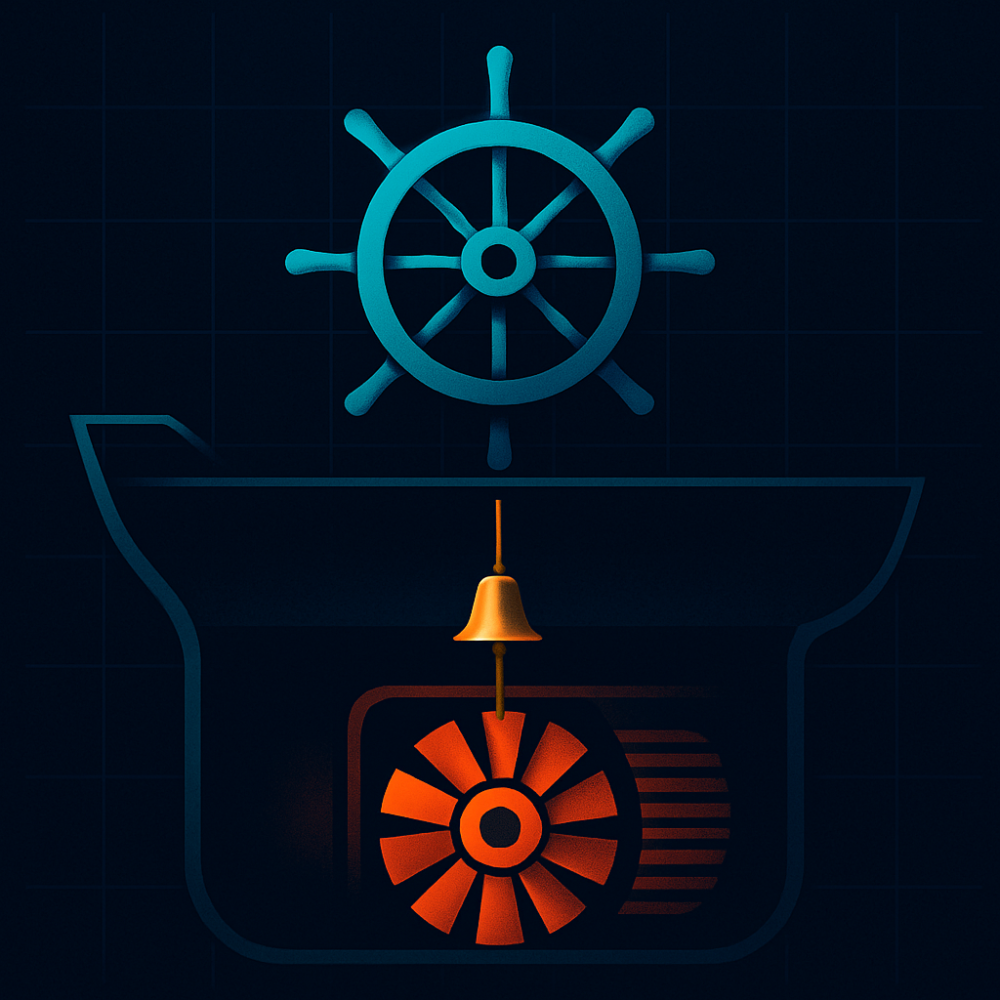
Think of AIOps as the engine room and ITSM as the navigation bridge. One generates capability and insight at scale; the other translates that into deliberate, governed, outcome-focused service delivery. Both are required. Neither is sufficient alone.
2. Where They Genuinely Overlap
The territory where AIOps and ITSM touch is where most of the confusion — and most of the opportunity — lives:
-
Incident Management: AIOps tools can detect anomalies, suppress noise, correlate signals across infrastructure layers, and surface probable root causes faster than any human analyst working through a queue. But someone still needs to own the incident record, co-ordinate the response, communicate with the business, and close the loop. ITIL® Incident Management does not go away — it gets sharper.
-
Problem Management: One of AIOps’ genuine superpowers is pattern detection across historical event data. Finding recurring infrastructure signatures that precede outages is exactly what ITIL® Problem Management has always aspired to do but struggled with at scale. AIOps gives Problem Management its teeth back.
-
Change Enablement: Predictive risk scoring — assessing a proposed change against historical change failure patterns and current system state — is an AIOps capability that integrates naturally into a mature Change Enablement process. It does not replace the risk assessment conversation; it informs it with data your team could never have aggregated manually.
-
Event and Alert Management: Most mature ITSM tooling already ingests events from monitoring platforms. AIOps adds the intelligence layer — reducing alert storms, prioritising by impact, and enriching incident tickets with contextual data before a human ever opens them. Crucially, the ITSM platform remains the system of record.
-
Experience-Level Outcomes (XLAs): AIOps is generating real-time telemetry about service performance and user-impacting events. That data is precisely what feeds meaningful XLA measurement — shifting the conversation from “did the service meet the SLA?” to “what did users actually experience?” ITSM owns that conversation; AIOps provides the evidence.
3. The Governance Gap Nobody Talks About
Here is where organisations come unstuck. They invest in an AIOps platform — IBM Watson AIOps, Moogsoft, Dynatrace Davis, ServiceNow AIOps, or similar — and they get genuinely impressive capability. Anomaly detection works. Alert correlation reduces noise significantly. Automated remediation scripts fire and fix things.
And then six months in, nobody can answer who owns a decision when the AI gets it wrong.
This is not a technology problem. It is a governance and service management problem. Questions like who authorises an automated remediation action on a production system?, how do we ensure the AI’s closed-loop actions are captured in the CMDB?, and what does our post-incident review look like when the AI resolved the incident before a human was ever involved? are pure ITSM questions. They require process design, clear RACI, and service architecture that accounts for both human and machine actors.
ITIL® 4’s guiding principles are genuinely useful here. Think and work holistically and collaborate and promote visibility are not platitudes — they are the design principles that prevent AIOps from becoming an ungoverned black box operating in the middle of your production estate.
4. What Mature Co-existence Looks Like
Organisations that have done this well share a few consistent patterns:
-
They integrated AIOps into their ITSM platform, not alongside it. Tickets, enrichment data, remediation logs, and closed-loop outcomes all flow into the same system of record. One version of truth, not two dashboards that sometimes agree.
-
They evolved service management roles rather than eliminated them. Service Desk analysts become intelligence-led triage specialists, operating on AI-enriched context rather than raw alert queues. Problem Managers become AI-output reviewers and pattern validation owners. Change Managers incorporate predictive risk scores into their assessments. The roles advance; they do not vanish.
-
They defined AI-specific governance artefacts. Automated action registers, AI confidence threshold policies — the point at which the system acts autonomously versus flags for human review — and model drift monitoring, so that as the environment changes, someone is accountable for keeping the AI current.
Treat Your AI Models as Configuration Items
This is the most underappreciated point in any AIOps deployment, and I make no apology for calling it out separately. If your AIOps platform is making decisions that affect production services, its models, thresholds, and training data are service components — full stop. They should be in your CMDB, they should have change records when updated, and they should have named owners. The same rigour you apply to a business-critical application should apply to the intelligence layer making autonomous decisions about it.
- They ran the continual improvement loop across both disciplines. Service review meetings include AIOps performance metrics: false positive rates, auto-remediation success rates, mean time to detect trends. These feed back into both AI model tuning and ITSM process design simultaneously.
5. The Human Element Remains Central
AIOps absorbs the repetitive, high-volume, lower-judgement tasks that currently consume a disproportionate amount of skilled human time: acknowledging alerts, triaging known issues, restarting services, escalating on pattern. What remains — and what expands — is the work that genuinely requires human cognition: interpreting AI outputs critically, understanding the service context the machine does not have, and governing the AI’s behaviour with the same rigour applied to any other component of the service estate.
The service management professionals who will thrive in this environment are those who can hold both — the technical literacy to interrogate an AI’s recommendation, and the service management fluency to understand its implications. That is not a lower bar. It is a higher one.
6. Practical Starting Points
If you are looking to bring AIOps capability into an ITSM-mature environment, here is where to focus:
-
Consolidate your observability first. AIOps cannot function on siloed, inconsistent telemetry. Before you invest in ML-driven correlation, ensure your monitoring data — infrastructure, application, network, end-user — is normalised and flowing into a coherent data layer.
-
Pick one ITSM process to integrate first. Incident Management is almost always the right entry point. Demonstrate value in noise reduction and faster detection before extending into Problem Management or Change Enablement.
-
Map your governance gaps before go-live. Identify every decision point where the AI might act and ask: who owns this if something goes wrong? Do not leave that question until after the first production incident caused by an automated action.
-
Register your AI models in your CMDB from day one. Establish change control for model updates, assign ownership, and include model performance in your service review cadence. Govern the machine as you would any other critical service component.
Conclusion
ITSM and AIOps are not fighting for the same territory. They are operating at different altitudes — one in the signal and detection layer, one in the governance and accountability layer — and the organisations that understand that distinction are the ones getting genuine, sustained value from their AI investments.
The service management discipline is not threatened by AIOps. If anything, it is more important than it has ever been — because someone needs to govern the machine, own the outcomes, and ensure that artificial intelligence operates within the same service quality commitments your organisation has made to its customers and users.
That is an ITSM job. And it is one worth doing well.
Hopefully this has been useful to you and I wish you well on your ITSM journey…